




Trump wanted cuts. Warsh said noand gold now faces a much tougher macro environment.
Gold traders were hoping Kevin Warsh’s first Federal Reserve meeting would open the door to lower interest rates. Instead, the Fed pushed it firmly shut.
There was virtually no discussion of rate cuts. Warsh focused on inflation, nine Fed officials projected higher rates this year, and the probability of a September hike jumped from approximately 38% before the meeting to 63% afterward.
Gold quickly reversed lower as Treasury yields and the U.S. dollar rose. This does not mean the longer-term gold rally is over. Geopolitical risk, central-bank buying and concerns about government debt can still support demand. But in the near term, gold faces higher rate expectations, rising yields, a stronger dollar and now a major technical breakdown.
Rate Cuts Are No Longer the Story
The biggest disappointment for gold was what the Fed did not say.
There was no meaningful discussion about when rates could come down. Warsh repeatedly emphasized that inflation remains well above the Fed’s 2% goal and that policymakers are committed to restoring price stability.
The Fed is not saying another hike is guaranteed. It is saying inflation remains too high to seriously consider rate cuts. That is a major shift.
Gold generally performs best when investors expect lower rates, falling yields and a weaker dollar. This meeting delivered the opposite. Instead of asking when the Fed will cut, traders are now asking whether its next move could be another hike.
The Dot Plot Turned Hawkish
Nine of the 18 officials who submitted projections expect rates to finish the year above their current level. Half of the committee now believes policy may need to become tighter. The median projection points to one increase this year, while several officials believe more than one hike may be needed.
Just three months earlier, none of the officials projected higher rates in 2026. The debate has changed quickly. The Fed is no longer deciding how long to wait before cutting. A growing number of officials believe holding rates steady may not be enough to control inflation. For gold, that is a clear headwind.
Why Higher Rates Hurt Gold
Gold does not pay interest.
When Treasury bills, bonds and cash offer higher returns, investors face a greater opportunity cost for holding bullion. Rising yields make income-producing assets more attractive. Higher rate expectations also support the U.S. dollar. Because gold is priced in dollars, a stronger greenback makes it more expensive for international buyers. Gold is therefore facing pressure from two directions: higher yields increase the cost of holding it, while a stronger dollar can weaken demand.
High Inflation Is Not Automatically Bullish for Gold
Gold is often described as an inflation hedge, but the relationship is not that simple. Inflation can support gold when investors believe the central bank is behind the curve or unwilling to tighten policy. That was not Warsh’s message.
The Fed raised its inflation projections and made clear that its 2% target is not changing. Policymakers intend to bring inflation down, even if that requires higher rates.
The message was not, “Inflation is high, so buy gold.” It was, “Inflation is high, so policy may need to become tighter.” Inflation without a credible Fed response can be bullish for gold. Inflation that produces higher yields and a stronger dollar can be bearish.
Gold Has Broken Below Its 200-Day Moving Average
The technical picture is confirming the bearish macro message.
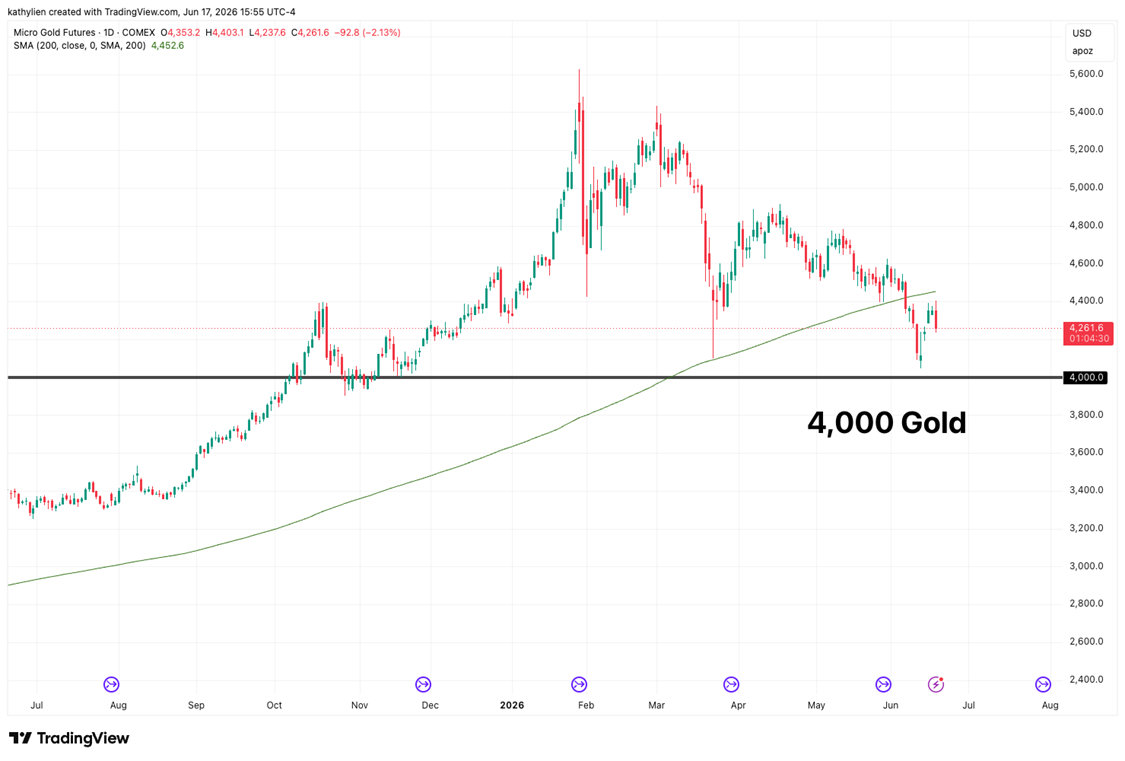
As the chart shows, gold has broken below its 200-day simple moving average, one of the most closely watched long-term trend indicators. A sustained break below the 200-day SMA suggests momentum has shifted and sellers are gaining control. It can also force trend-following traders to reduce bullish positions or begin selling rallies. The next major support level is around $4,000.
But traders should not assume gold will automatically stop there. If $4,000 breaks decisively, the selloff could extend much lower as stop-losses are triggered, buyers step aside and former support begins acting as resistance. For gold bulls, reclaiming the 200-day SMA would be the first sign that the breakdown has failed. Until then, both the technical and macro pictures remain bearish.