


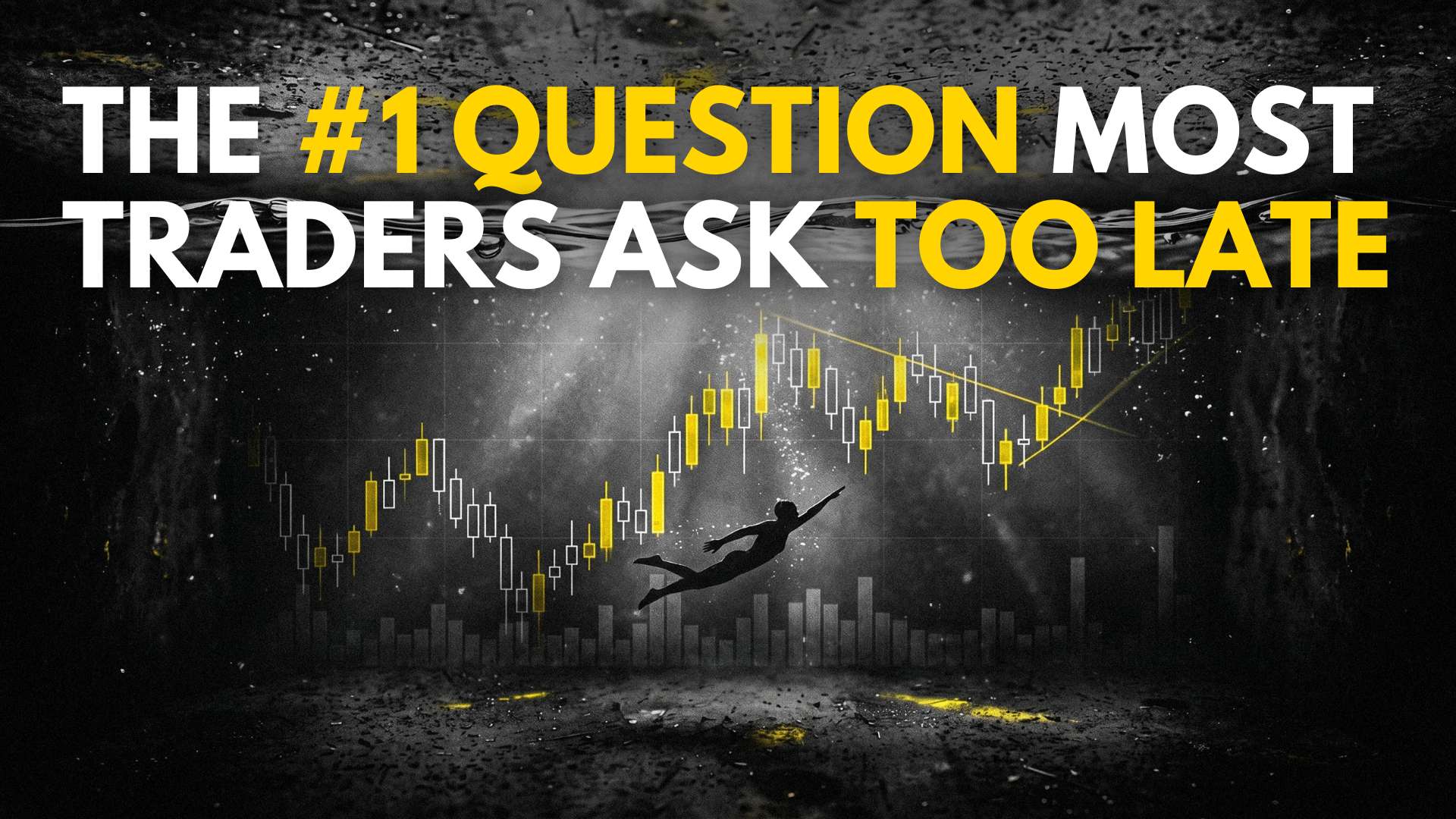

Ask a trader how much they expect to make on their next trade, and the answer usually comes fast. Ask how much they are willing to lose, and suddenly there is hesitation. That pause tells you everything.
Traders Think About Profit First
Most traders enter the market focused on what a trade could give them. They picture the profit before the order is even filled. In their minds, the money is already earned, withdrawn, and spent. The potential loss gets pushed aside. They will deal with it if the trade moves against them. But by then, it is often too late.
The position is underwater, emotions have taken control, and the original plan has been replaced by hope. A small, manageable loss turns into a major drawdown because the trader never decided where the trade was wrong.
Reverse the Process
Before calculating how much you could make, calculate exactly how much you could lose. Ask yourself how much of your account is at risk, where you will exit if the setup fails, and whether your account can comfortably survive the loss.
The question is not whether the trade might be wrong. It will be wrong at times. Every trader loses, including the best traders in the world. The difference is that experienced traders decide in advance how much being wrong will cost them. The loss is planned, limited, and small enough to survive.
Knowing Your Risk Reduces Fear
That is not negative thinking. It is disciplined trading. When you know your maximum downside, you can manage the position with a clearer head. Much of the fear that causes traders to cut winners early, move stops, or freeze inside losing trades comes from uncertainty. They do not know where the floor is.
Define that floor before entering, and the fear begins to lose its power. You stop reacting to every tick and start following the plan.
Drawdowns Are Harder to Recover From
The math also makes protecting capital essential. If you lose 50% of your account, a 50% gain will not bring you back to breakeven. You need a 100% return just to recover. That is why large losses are so damaging. The deeper the drawdown, the harder the climb back becomes.
You cannot compound an account that has been blown. You cannot take the next high-quality setup if you have already lost your funding. Survival is not simply one part of a trading strategy. Survival is the strategy.
Professionals Focus on the Downside
Professional traders rarely begin by talking about the upside. They focus on position size, stop placement, total exposure, and the exact level that invalidates the trade. Once the risk is controlled, the reward has room to take care of itself.
The amateur becomes emotionally attached to the outcome of one trade. The professional thinks about the next hundred or thousand trades.
Name the Number Before You Enter
Before clicking buy or sell, picture the trade moving against you. Set the exit. Name the dollar amount. Make sure the loss is small enough that you can return tomorrow with your account intact, your confidence stable, and enough capital to take the next opportunity.
If the potential loss makes you uncomfortable, the position is too large. It really is that simple.
Risk First, Reward Second
Risk first. Reward second. Follow that order consistently, and you will outlast the traders who enter every position thinking only about how much they can win. In trading, the people who stay in the game are the ones who eventually give themselves a chance to win.