




In today’s environment, weekend headline risk has become a major factor. Geopolitical developments, military escalations, tariff announcements and emergency policy decisions frequently hit the wires late Friday or over the weekend. By the time futures reopen Sunday evening, traders around the world are forced to reprice risk immediately. That is when we see gaps.
There is also a reason many major announcements come over the weekend. Policymakers understand that releasing sensitive news while markets are open can trigger extreme volatility. When markets are closed, investors have time to digest the information. Analysts publish research, institutions reassess exposure and traders prepare their game plan. By the time futures reopen, the reaction can still be sharp, but it is usually more orderly than it would be during live trading hours.
We saw this play out again on the Sunday March 2nd open. Markets reacted quickly to geopolitical headlines. Gold jumped as investors rushed into safe havens. Oil soared on concerns about supply disruptions. At the same time, stock index futures gapped lower as traders reduced risk exposure.
The moves were significant, but they were not chaotic. Markets were simply repricing new information.
For prop traders, these situations can create excellent opportunities. But they also require discipline. When you are trading a funded account, protecting capital is just as important as finding the right trade. Chasing the first move after a gap can be dangerous, especially when volatility is elevated.
Instead, it helps to approach gaps with a clear structure.
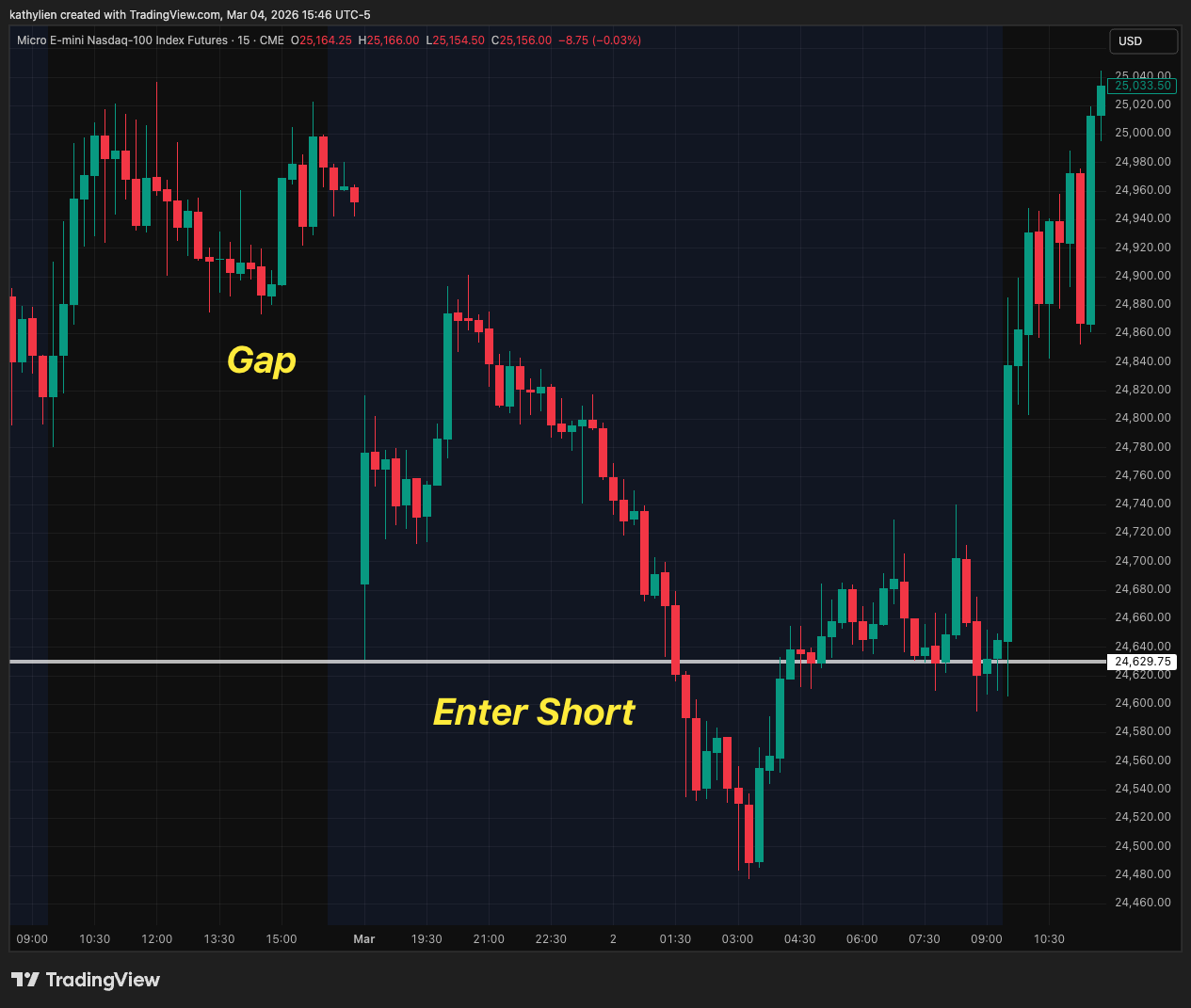
The first strategy is to fade the gap. Don’t jump in right away because the first few minutes of the market open is the most chaotic. Instead wait for the 15 minute candle to close, make sure there is a decent sized wick which reflects a rebound and that the initial move has flowed through, then fade the move with a stop at the 15 minute candle for a gap down and at the 15 minute candle high for a gap up.
Here's a look at how the setup would have worked on in the Nasdaq at the Sunday open. This 15 mintue chart shows a gap down, wait for the move to happen, wait for the 15 minute candle to close. Then you can go long with a stop at the 15 minute candle low, targeting half to 75 percent of the gap move.
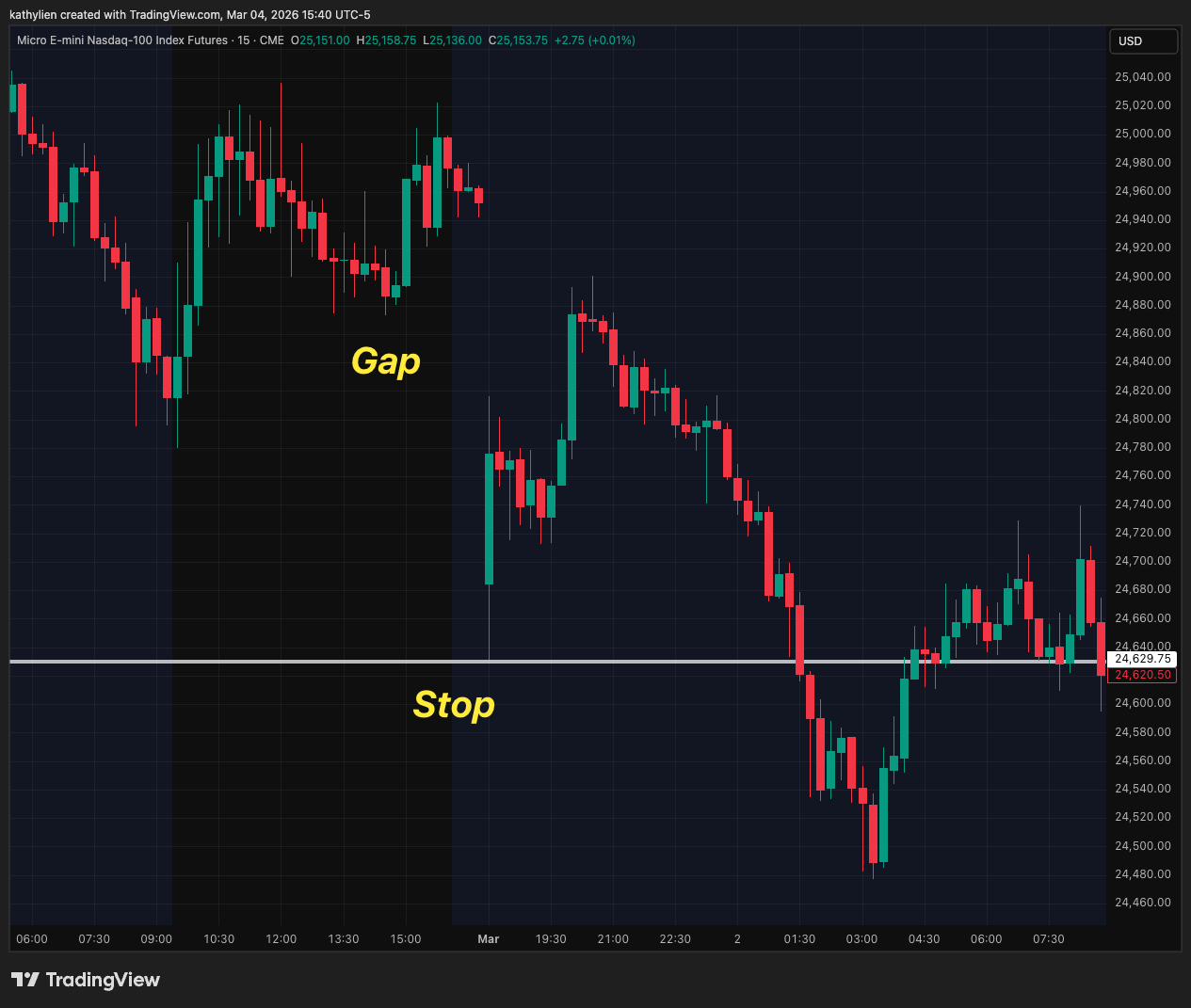
The second option is to wait for 75% gap to be filled then enter in the direction of the trade after the 15 minute news candle is broken. Markets frequently retrace back toward the prior closing price before deciding what to do next. When the gap is filled, traders look to see whether the previous trend resumes.
This requires patience but it increases the validity of the trade. In this same Nasdaq example the prior fade trade stop becomes the entry.