





Most traders think price moves because of news, indicators, or patterns.
But if you spend enough time watching the market, especially in futures like NQ, ES, or Gold, you start to realize something else:
Price moves because of liquidity.
Understanding how liquidity works isn’t just helpful, it’s one of the biggest edges you can have as a prop trader. It explains why stops get hit before the real move… and why breakouts sometimes fail while others explode.
Let’s break down two of the most important concepts: liquiditysweeps and liquidity runs.
What Is Liquidity?
Before we get into the setups, you need to understand one thing:
The market needs orders to move.
Big players can’t just enter massive positions whenever they want. They need liquidity on the other side. And where is liquidity?
That’s where retail traders place their orders. And that’s exactly what institutions target.
Liquidity Sweep: The Trap
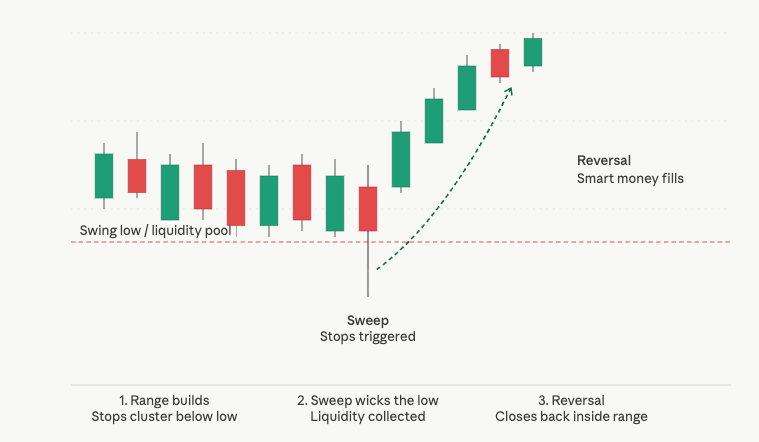
A liquidity sweep happens when price moves into a level where stops are clustered… takes them out… and then reverses.
This is what many traders call a “stop hunt.”
What it looks like:
Whyit happens:
Institutions use that burst of orders (liquidity) to enter their positions in the opposite direction.
They’re not chasing the breakout
They’re using it
Example (NQ or ES):
Price pushes above the morning high
Retail traders buy the breakout
Stops from shorts get triggered
Then price snaps lower
That entire move above the high?
That was the liquidity sweep
How prop traders trade it:
This is a mean reversion / reversal play
Liquidity Run: The Real Move
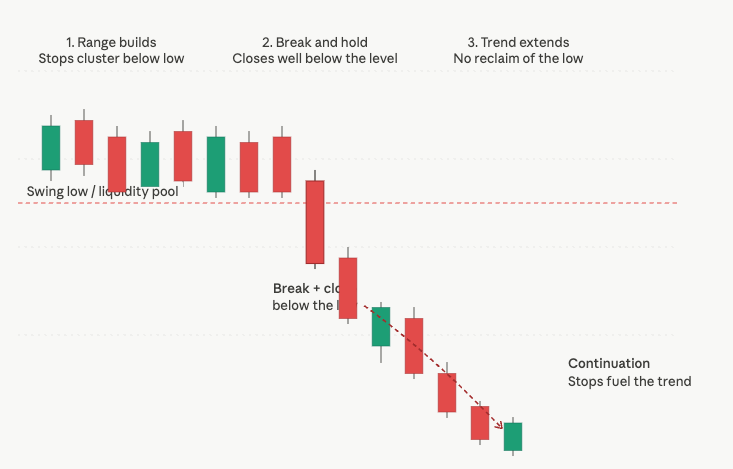
A liquidity run is the opposite.
Instead of reversing after taking liquidity, price keeps going.
This is where the biggest moves happen.
What it looks like:
Whyit happens:
Once liquidity is taken, there’s nothing left to stop price
No more opposing orders
No more resistance
Just momentum
Example:
Price breaks above a consolidation range
Takes out stops and breakout entries
And then keeps pushing higher for the next hour
That’s a liquidity run
How prop traders trade it:
This is a trend / momentum play
Your job as a prop trader is simple:
Figure out which one is happening
How to Tell the Difference (In Real Time)
You won’t always know immediately. But there are clues.
1. Speed and follow-through
2. Structure
3. Time of day
4. Context
Key Takeaway
Liquidity is the engine behind price movement.
Sweeps and runs are just two different outcomes of the same process:
The market searching for orders
If you can learn to read that…
You stop trading blindly
And start trading with intent
And in prop trading, that’s the difference between passing a challenge…
And getting stuck in evaluation mode.
Don’t overpay for evaluations. Get the best prop firm deals with code EDGE → https://proptraderedge.com/discounts/