





The Nasdaq is already down roughly 6% from its recent high, and a potential double top is forming on the chart.
That does not mean a bear market has begun. But it does mean the warning lights are flashing.
Trade tensions are escalating. Tensions with Iran remain a major geopolitical risk. Weaker U.S. economic data is raising questions about the strength of the economy. Technology stocks are under pressure, and suddenly the stock market rally does not look quite as unstoppable as it did a few weeks ago.
This is when trading a bear market becomes dangerous. Traders make a critical mistake when they assume every pullback is another opportunity to buy the dip.
That strategy works until the market changes.
If there is one rule every trader needs to understand before the next bear market, it is this:
Trade in the path of least resistance.
A bear market is officially defined as a decline of 20% or more from a recent high. But waiting for that 20% threshold to adjust your trading is like waiting until the storm arrives before looking for shelter.
The clues usually appear much earlier.
Momentum slows. Breakouts fail. The market stops making new highs. Strong stocks begin selling off on good news. Rallies become shorter, weaker and more difficult to hold.
We saw it during the dot-com collapse from 2000 to 2002, when the Nasdaq lost nearly 80% of its value. We saw it during the 2008 financial crisis, when the S&P 500 fell by more than 50%. In 2020, the COVID crash pushed the market down more than 20% in a matter of weeks. In 2022, rising interest rates crushed many of the technology and growth stocks traders had believed could only go higher.
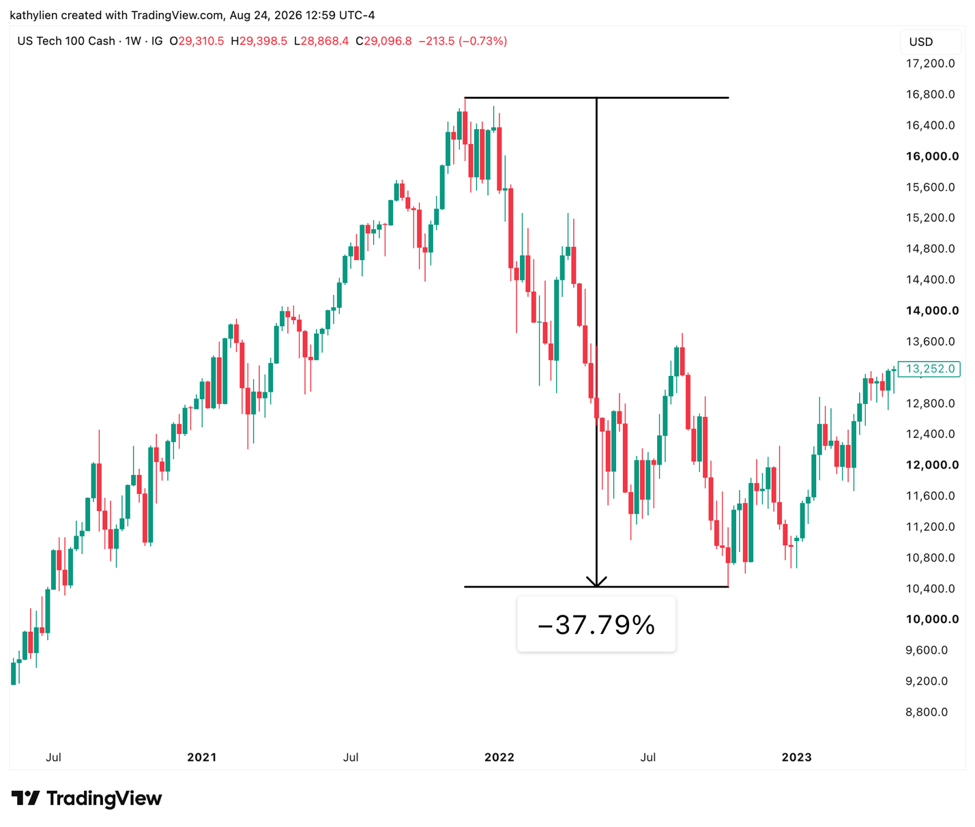
The catalyst changes. The trap does not.
Traders keep trying to buy the market they remember instead of trading the market in front of them.
Stop Trying to Pick the Bottom
In a bull market, weakness attracts buyers. Pullbacks are brief, support levels hold and buying the dip feels almost automatic.
In a bear market, that playbook can destroy an account.
Rallies are sold. Support levels break. Stocks that look cheap become cheaper. Traders buy because the market is already down 10%, then panic when it falls another 10%.
The market does not care how far you think it should fall.
Instead of asking, “Has it fallen enough?” ask better questions.
Is price making lower highs and lower lows? Are rallies failing at resistance? Is former support becoming resistance? Are the major indexes struggling below key moving averages?
If the answer is yes, sellers are still in control. The path of least resistance is lower.
That does not mean blindly shorting every red candle. Bear markets produce some of the fastest rallies you will ever see. It means waiting for those rallies to fail instead of assuming every bounce is the beginning of a new bull market.
It also means adapting. Reduce your position size. Take profits faster. Stop adding to losing trades. Be willing to sit in cash when price action is messy.
Cash is a position, and protecting your capital gives you the ability to trade when a real opportunity appears.
The Nasdaq’s current pullback does not guarantee a crash. A double top is only confirmed if support breaks and sellers follow through. But with trade disputes, Iran tensions and weaker economic data threatening the rally, this is not the time for complacency.
You do not need to predict the next bear market.
You need to recognize when the market has changed and have the discipline to change with it.
Do not fight the trend. Follow the path of least resistance.